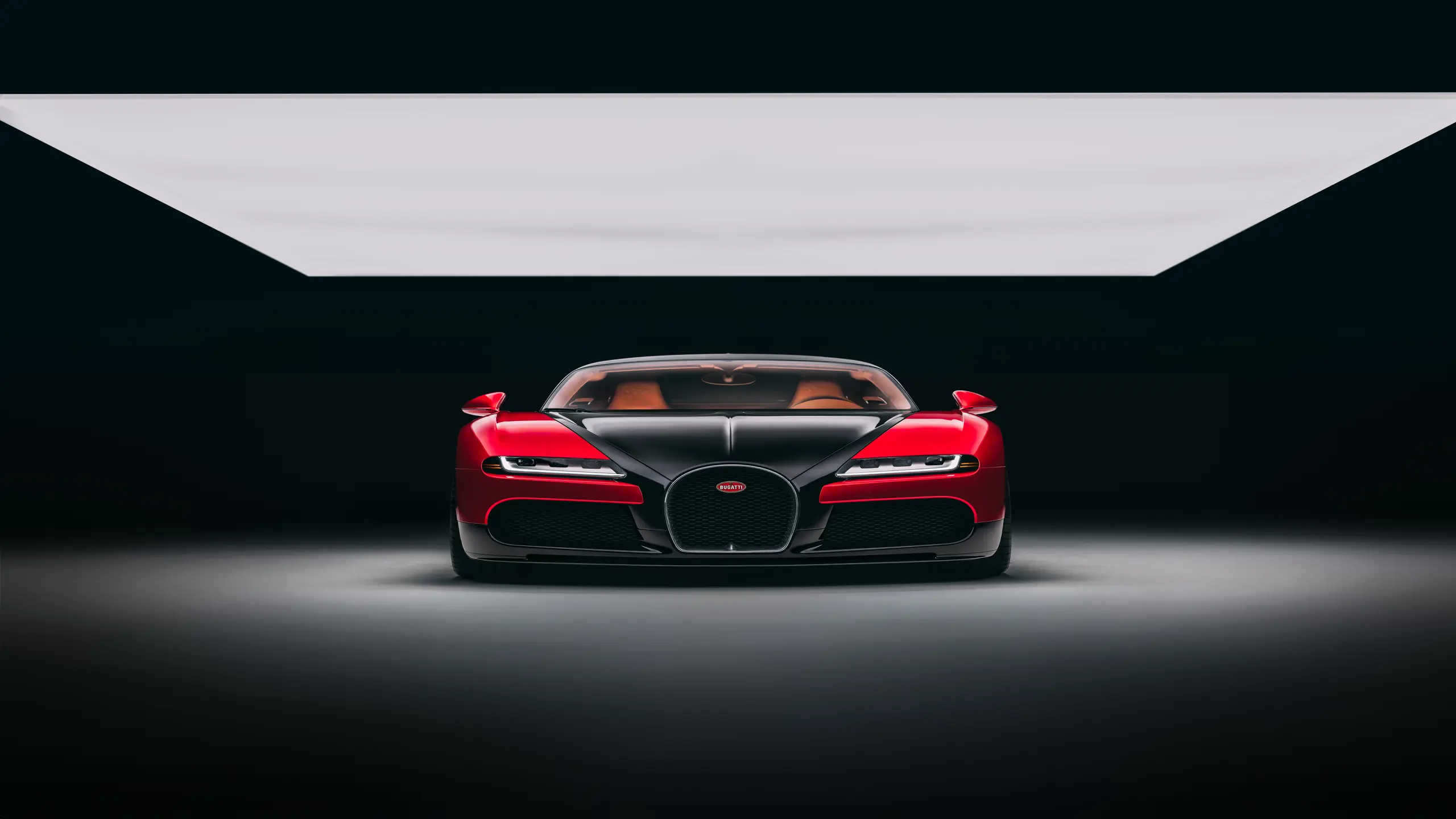
The Hyper-GT That Redefined the Impossible
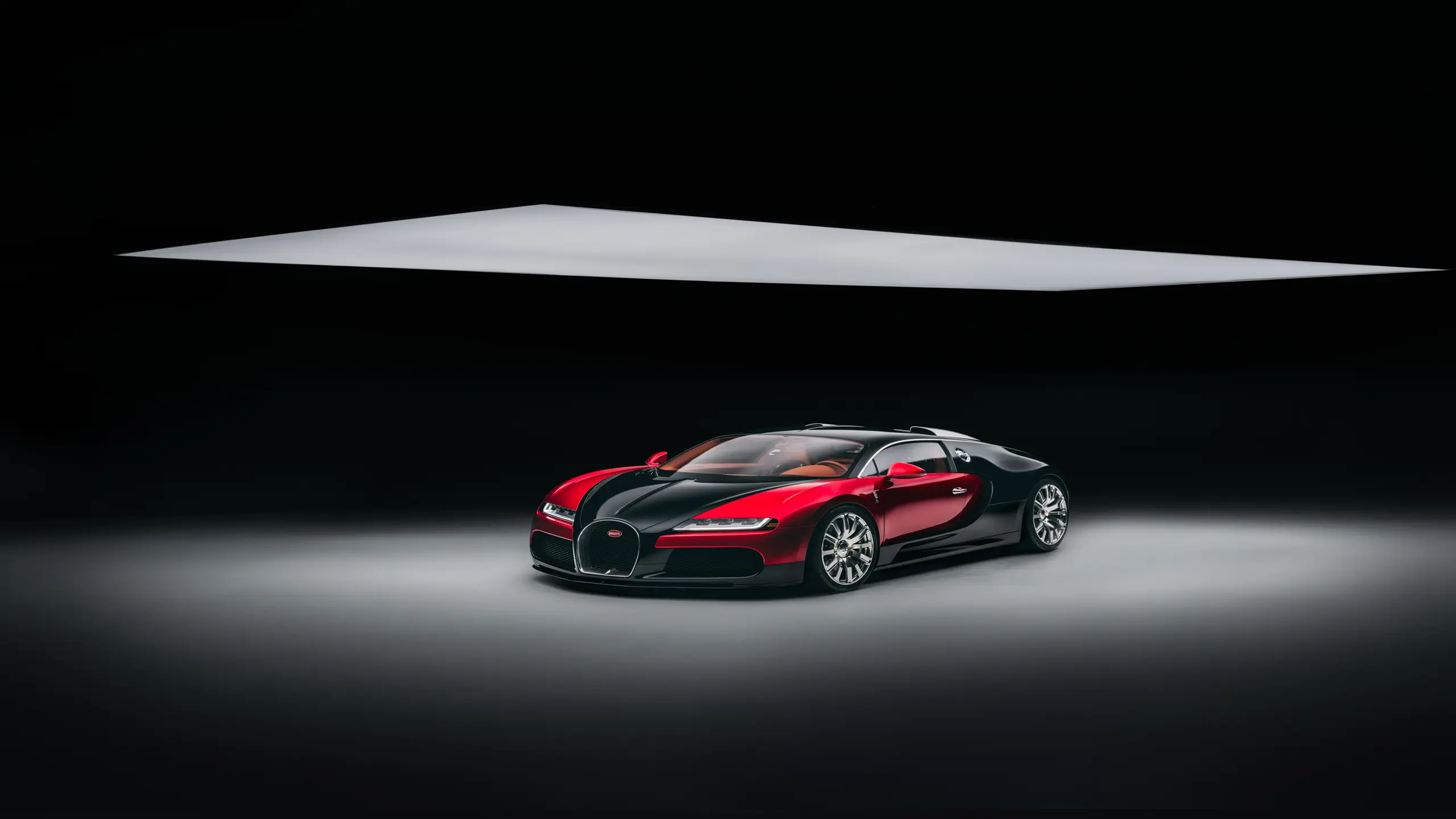
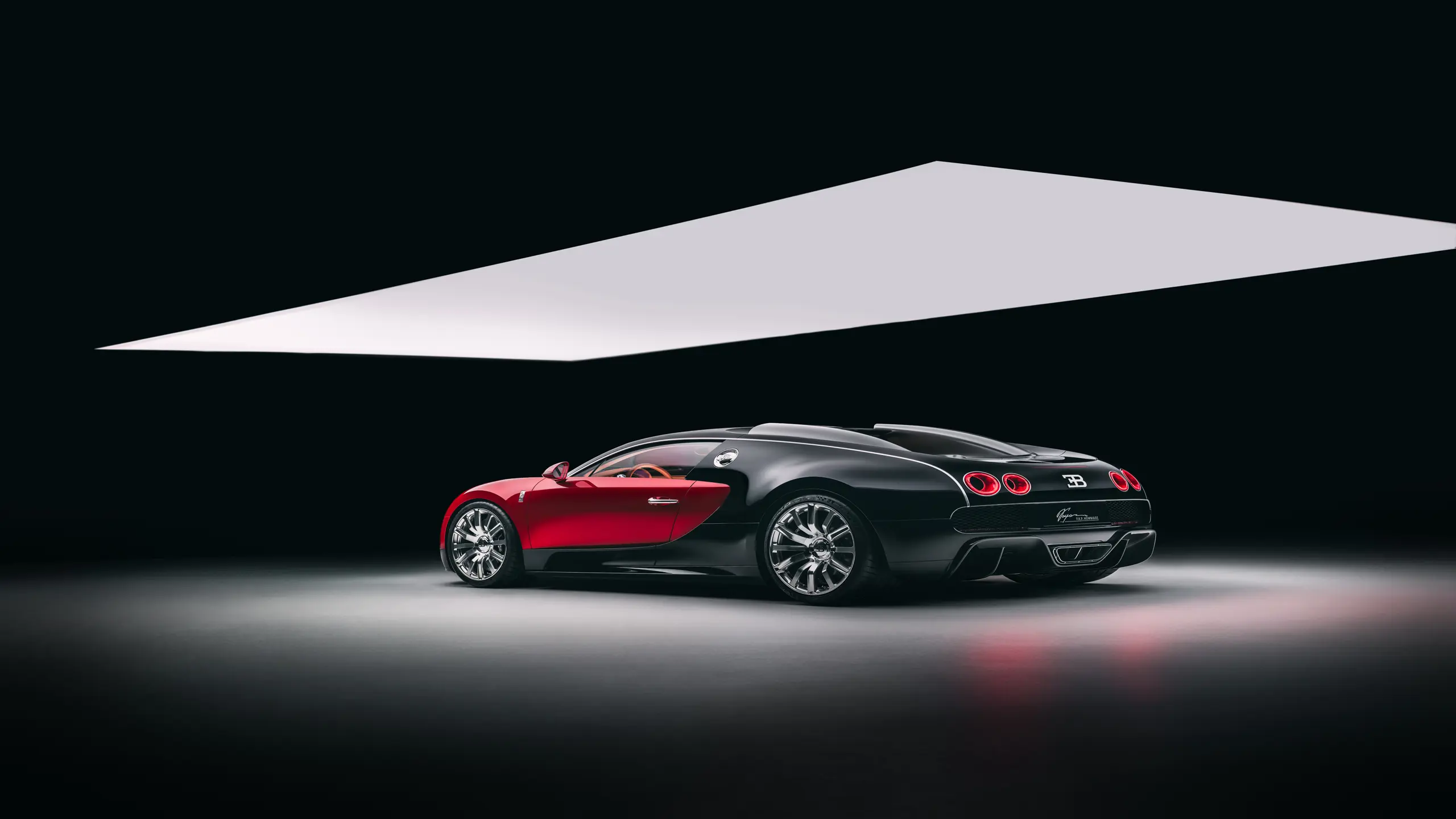
Twenty years ago, the Bugatti Veyron did not simply reset performance benchmarks, it fundamentally redefined what a road car could be. With 1,001 horsepower, a top speed exceeding 400 km/h and refinement on par with the world’s most luxurious grand tourers, it created an entirely new category: the hyper-GT. No longer was extreme speed incompatible with comfort, usability or craftsmanship. The Veyron proved that all of it could coexist, seamlessly. Now, Bugatti marks that watershed moment with the F.K.P. Hommage, the second creation under its ultra-exclusive Programme Solitaire. More than a tribute, this one-off masterpiece is conceived as the ultimate, definitive Veyron, a car that distills the original’s philosophy while incorporating two decades of relentless engineering evolution. Named in honor of Prof. Dr. Ferdinand Karl Piëch, the visionary engineer who demanded the impossible and refused compromise, the F.K.P. Hommage stands as both celebration and culmination. Rather than revisiting the past through nostalgia, Bugatti has chosen a more ambitious path. The F.K.P. Hommage asks a provocative question: what would the Veyron be if it were created today, with everything Bugatti has learned since? The answer is not louder or more aggressive, but more resolved, more refined and more absolute.
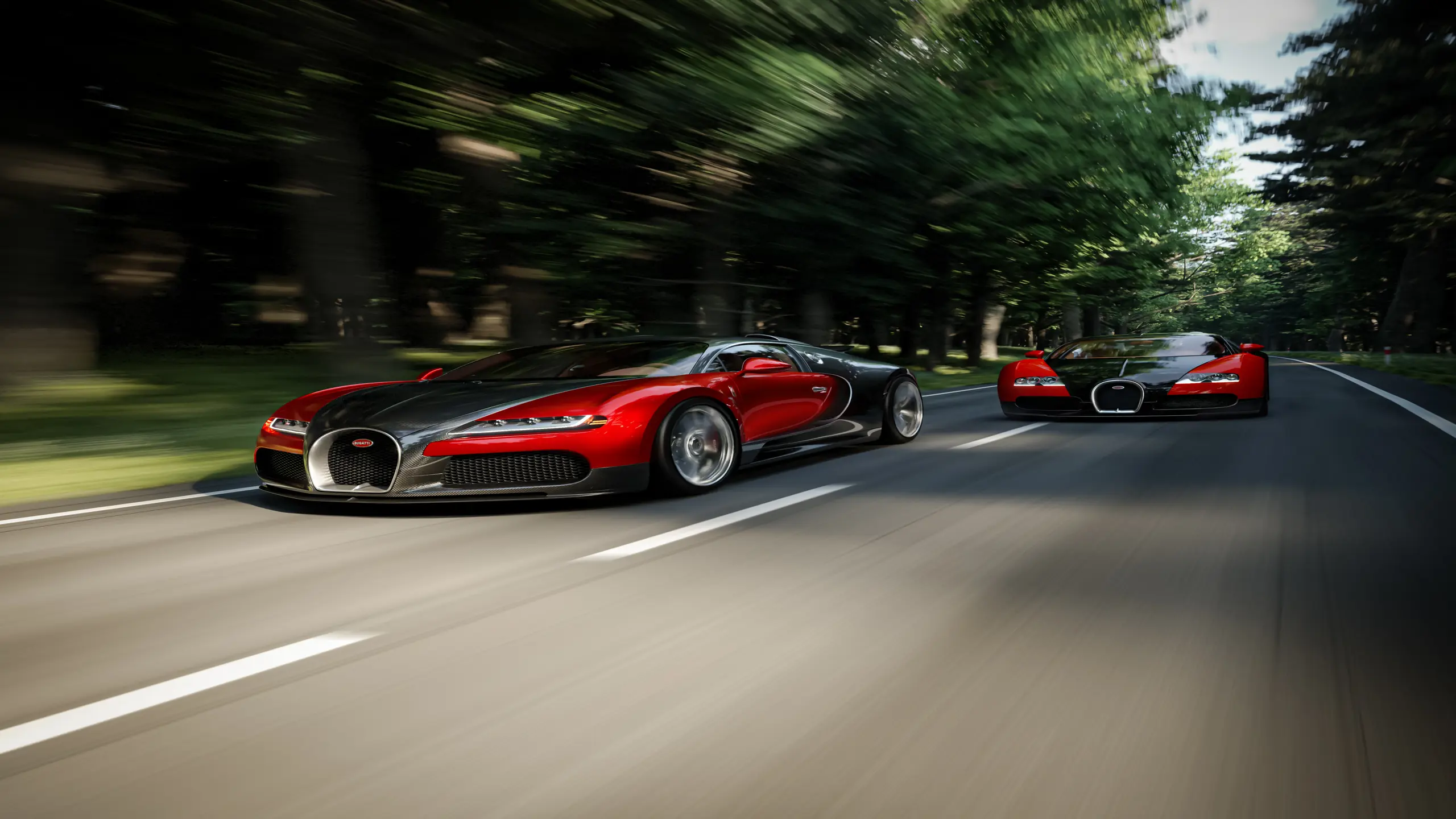
An Engineering Idea Born at Speed
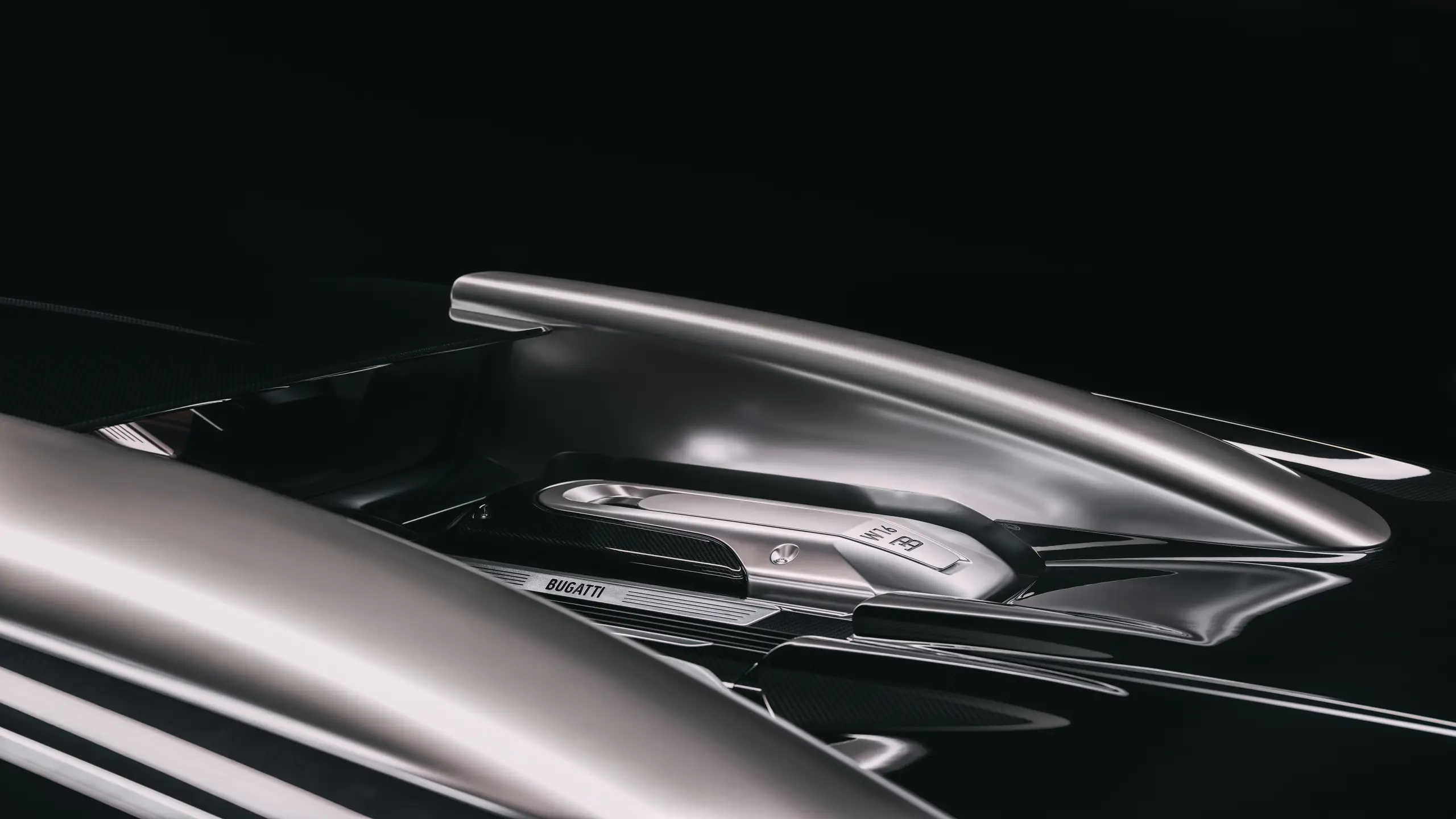
The origins of the Veyron legend are famously unconventional. Its defining concept was sketched not in a design studio, but aboard a Japanese bullet train, where Ferdinand Piëch envisioned a radical W-engine configuration that would become the foundation of Bugatti’s rebirth. Having already reshaped powertrain engineering with Volkswagen’s VR architecture, from the VR6 through to the W8 and W12, Piëch pushed the concept to its ultimate expression: the quad-turbocharged W16. The genius of the W16 lay in its packaging. By staggering the cylinders in a short, wide-bank configuration, engineers compressed an engine that would normally stretch close to a meter in length into just 645 millimeters. This allowed the Veyron to achieve a compact wheelbase, all-wheel drive and near-perfect weight distribution, critical ingredients in creating a car capable of unprecedented speed without sacrificing composure. The F.K.P. Hommage builds upon the very peak of that lineage. It employs the most powerful evolution of Bugatti’s iconic engine: the 1,600 hp quad-turbocharged W16 first introduced in the Chiron Super Sport. Larger turbochargers, enhanced intercoolers, optimized cooling systems and a reinforced dual-clutch gearbox ensure that this final expression of the W16 delivers its immense performance with effortless authority. It is the ultimate mechanical interpretation of Piëch’s uncompromising mandate: absolute power, absolute control.
Design Confidence, Perfected Over Time
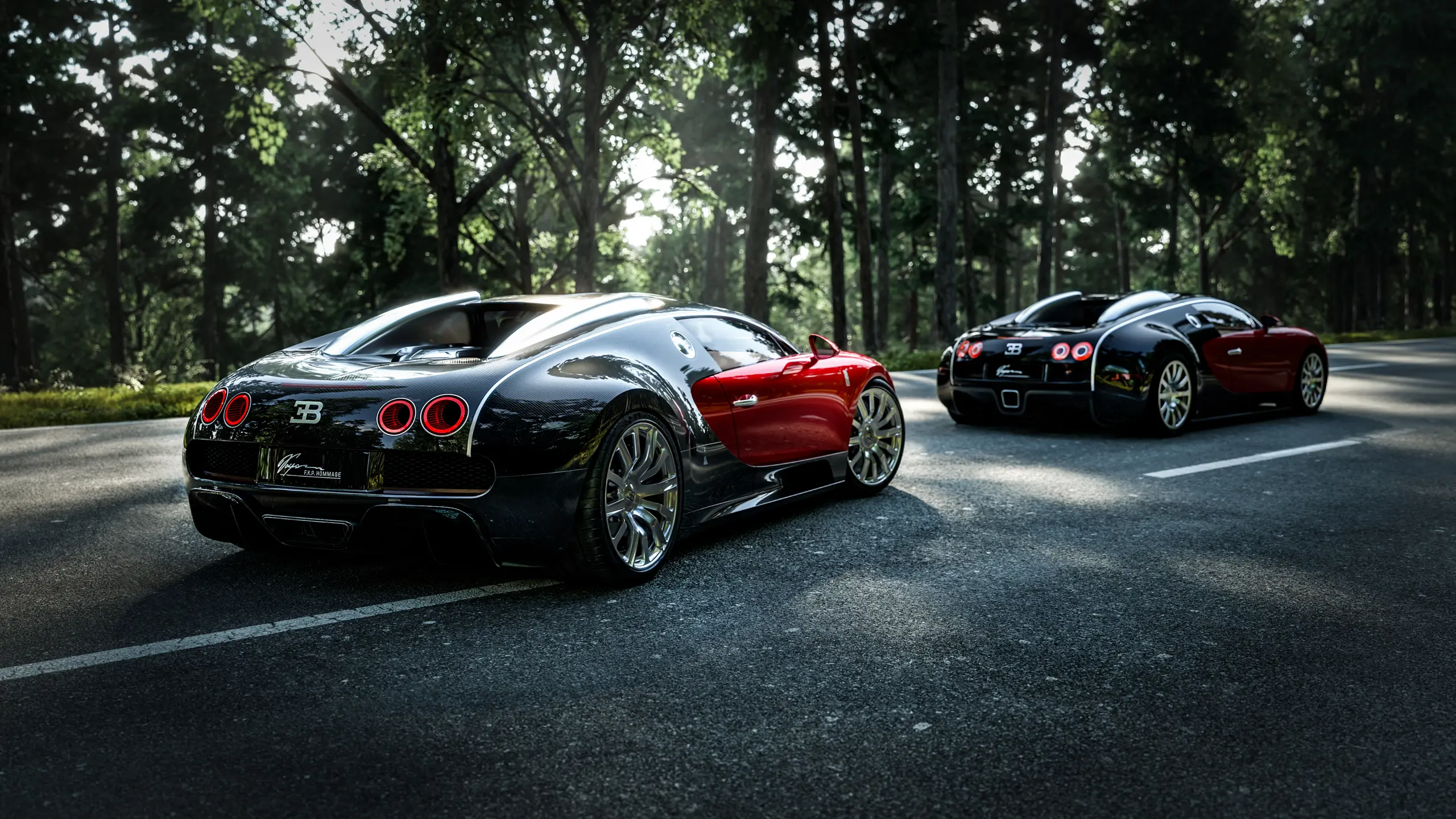
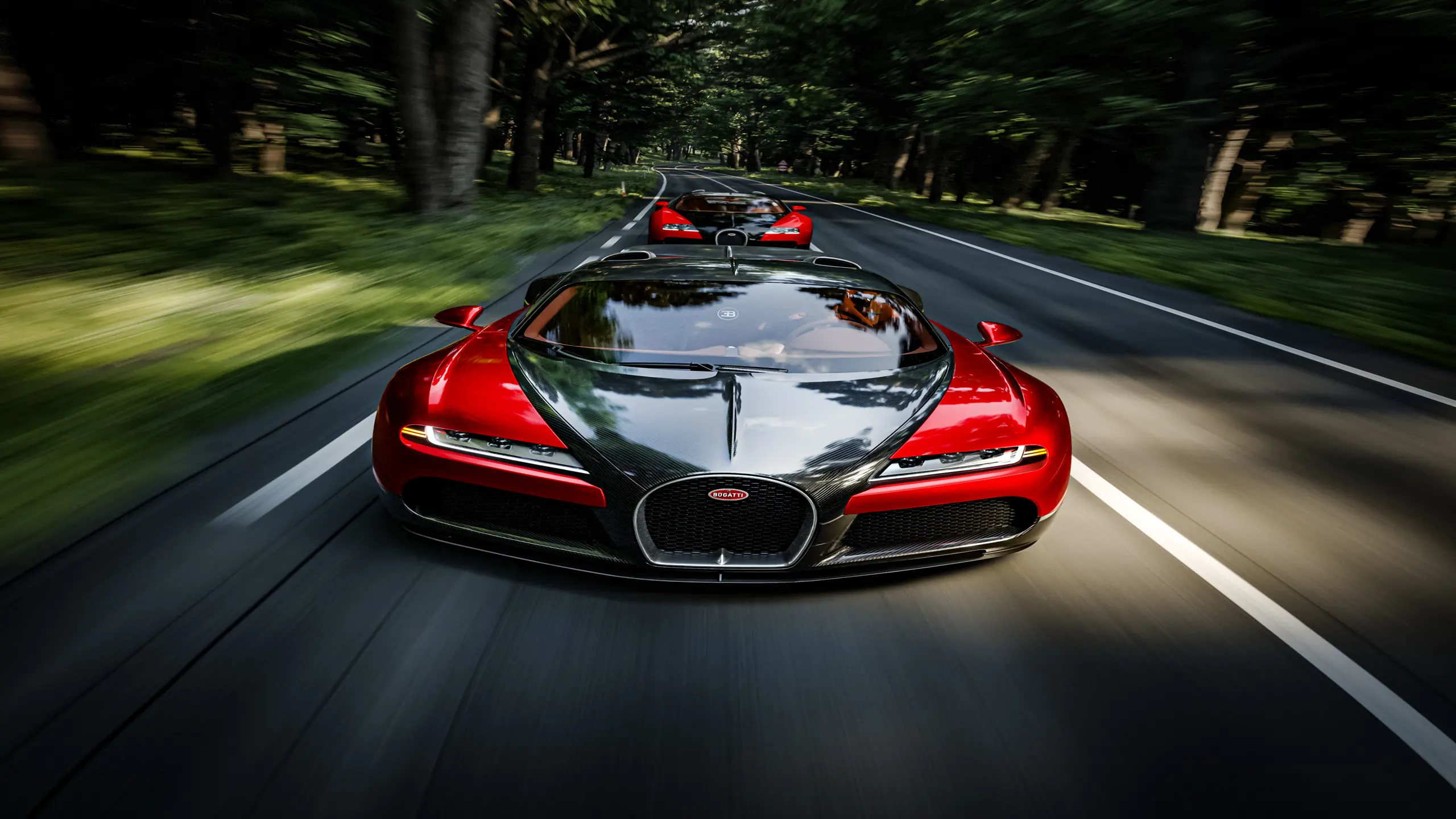
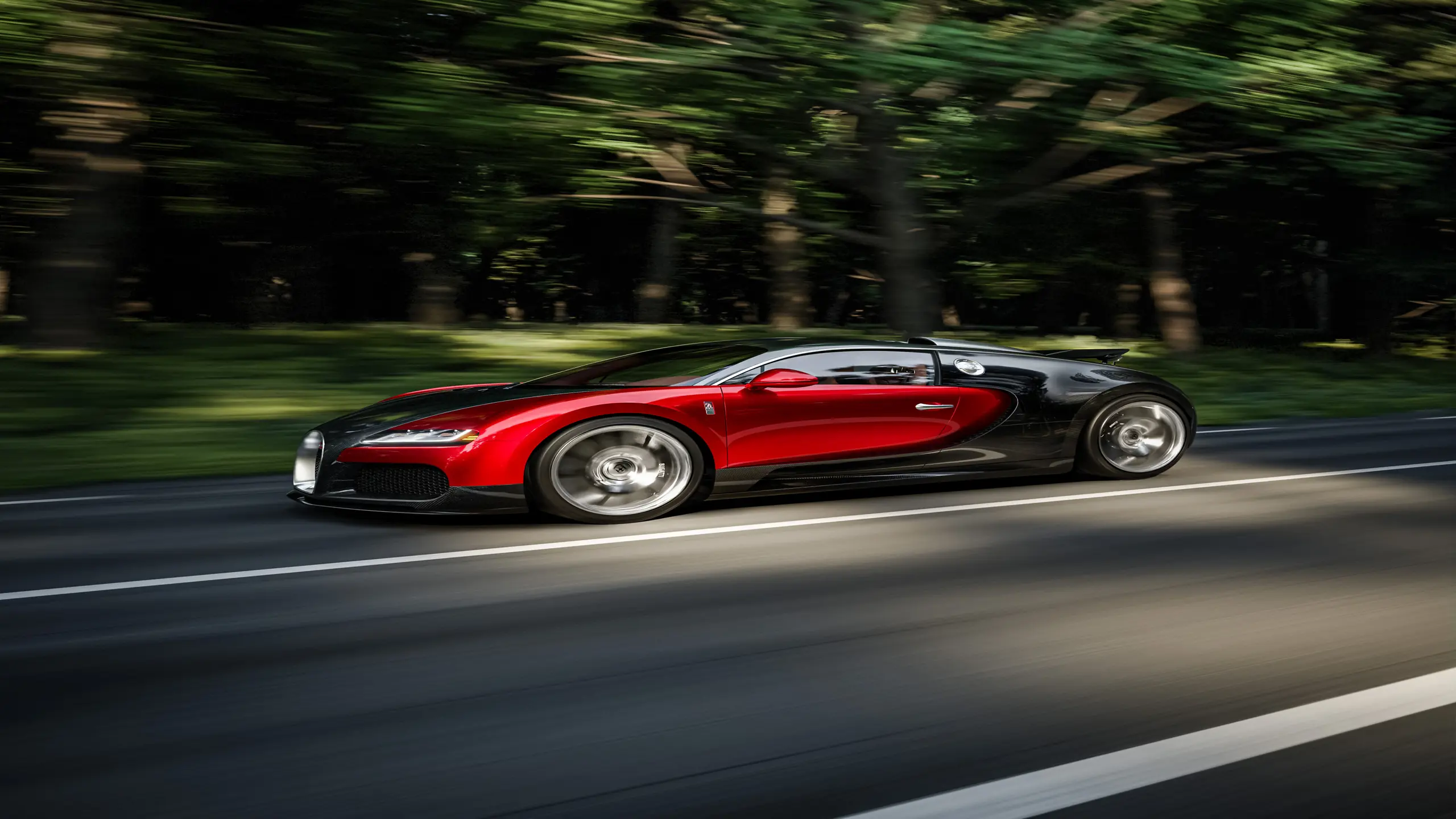
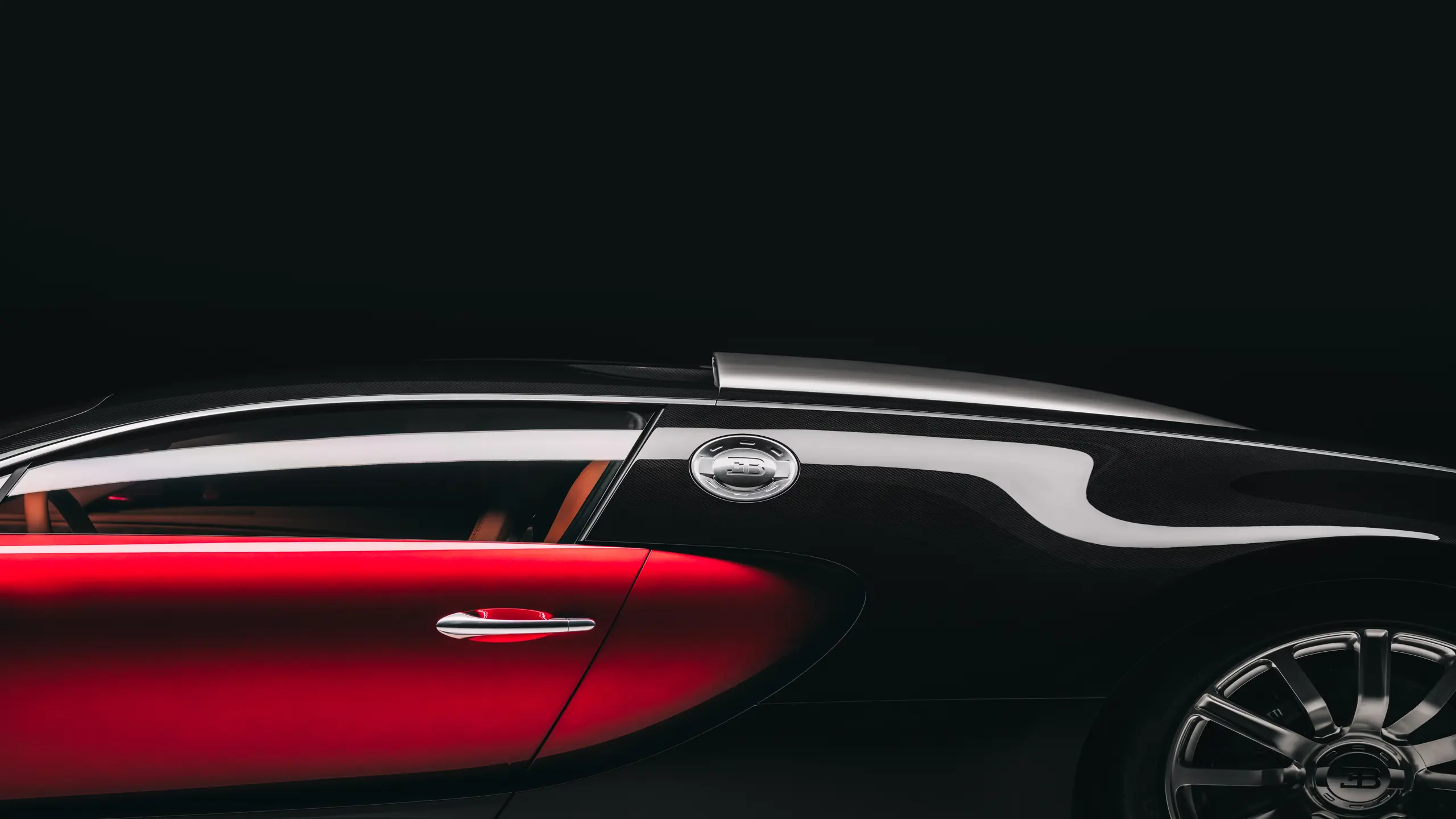
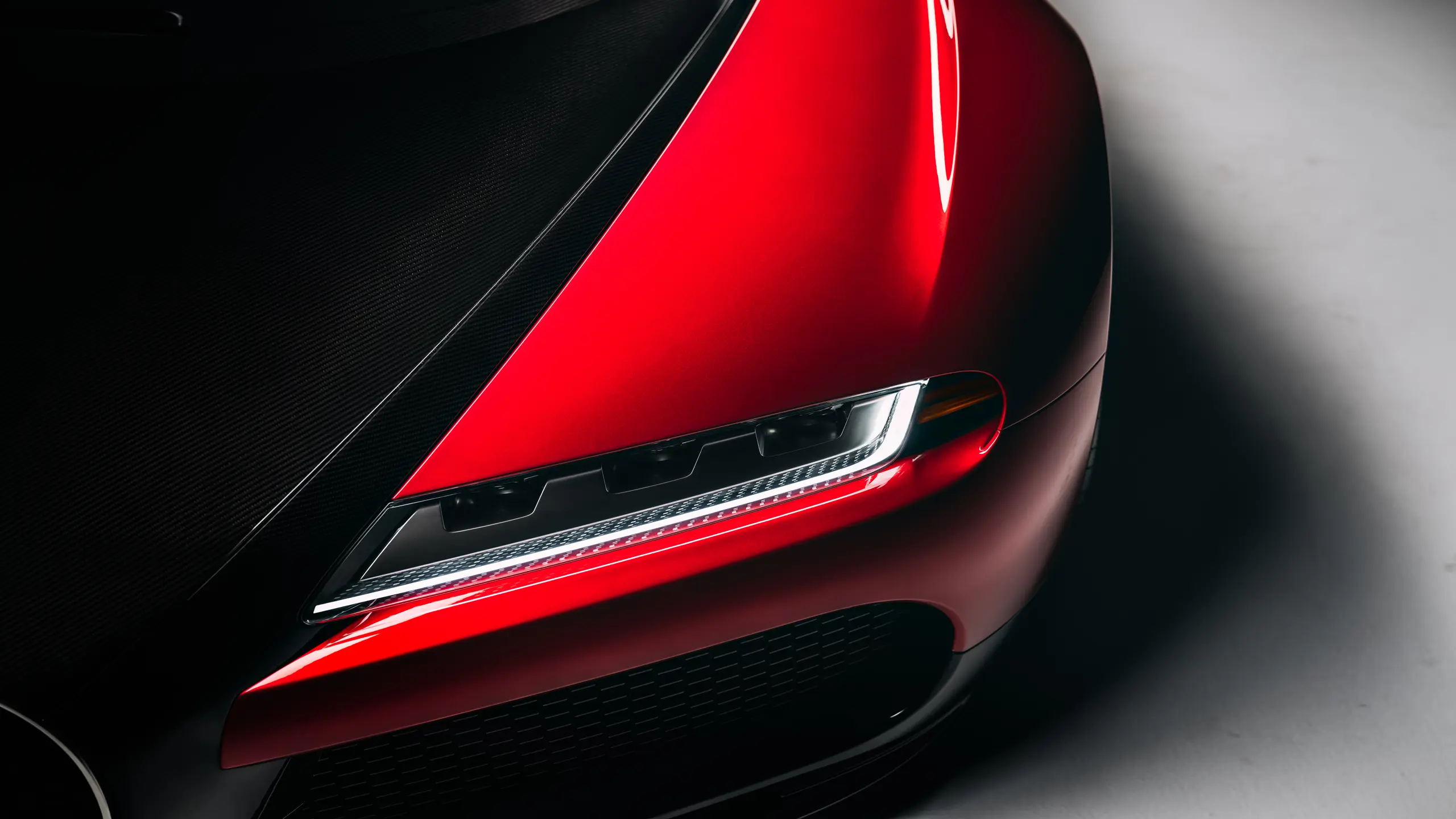
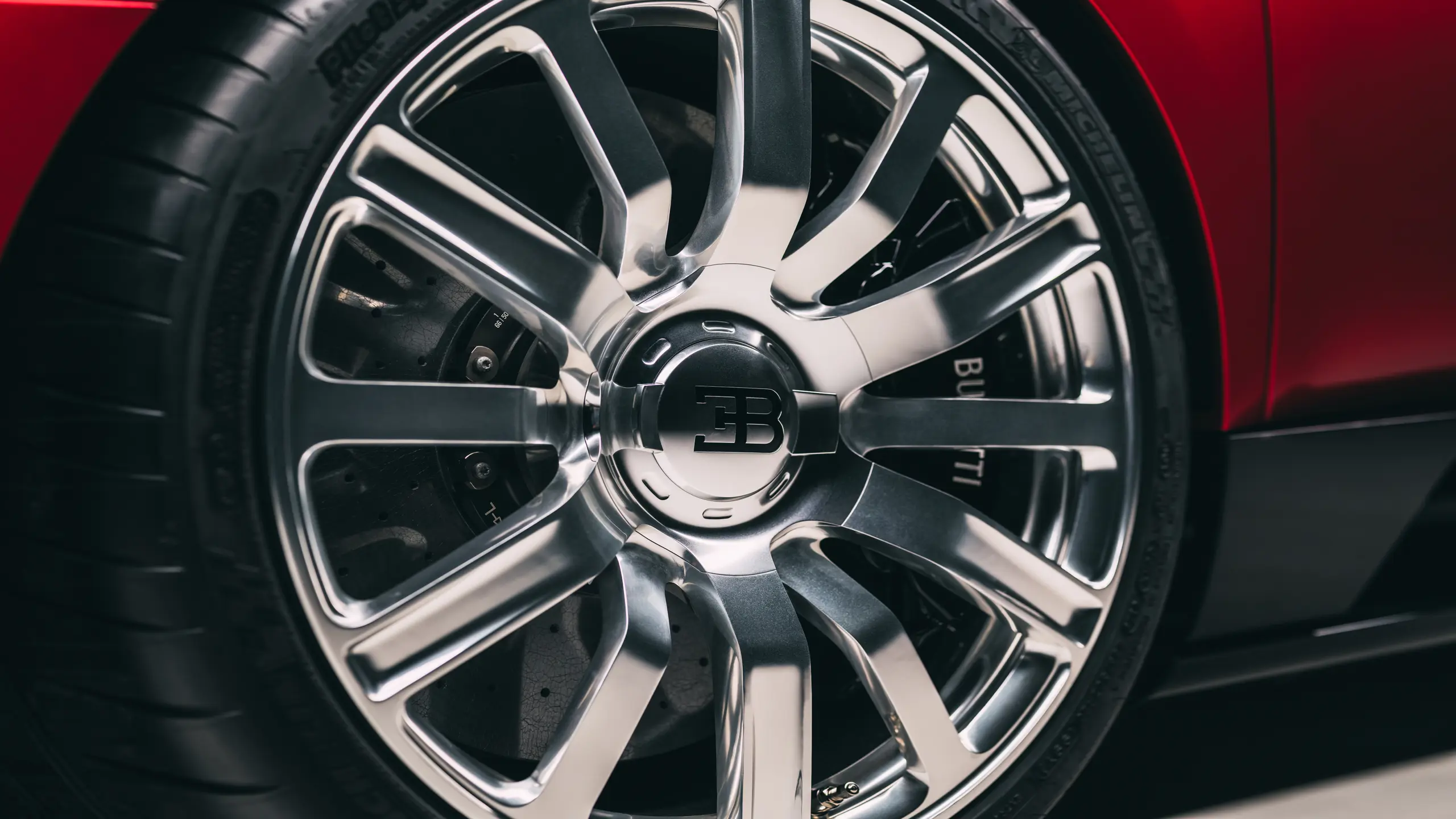
When the Veyron debuted at the 1999 Tokyo Motor Show, it stood apart visually as much as technically. Designed by Jozef Kabaň under Hartmut Warkuß, it rejected the aggressive wedge forms that dominated the supercar world. Instead, it appeared calm, composed and self-assured, a 1,000-horsepower car defined by confidence rather than theatrics. Two decades on, that Bauhaus-influenced design philosophy has aged with remarkable grace. The F.K.P. Hommage preserves this DNA while refining every surface. The characteristic leaning-back stance and flowing beltline remain intact, but the bodywork has been subtly re-sculpted for greater clarity and cohesion. The iconic horseshoe grille, now machined from a solid block of aluminum, takes on a fully three-dimensional form, blending organically into the surrounding surfaces. Color separation follows the updated panel architecture with surgical precision, while larger front air intakes feed the more powerful engine beneath. Updated wheel sizes, 20 inches at the front, 21 inches at the rear, house the latest Michelin tire technology, improving both performance and visual balance. Advanced paint techniques add further depth, most notably a red finish achieved through layered aluminum and tinted clear coats, contrasted by black-tinted exposed carbon fiber that reveals its richness only under close inspection.
Mechanical Haute Couture and Personal Vision
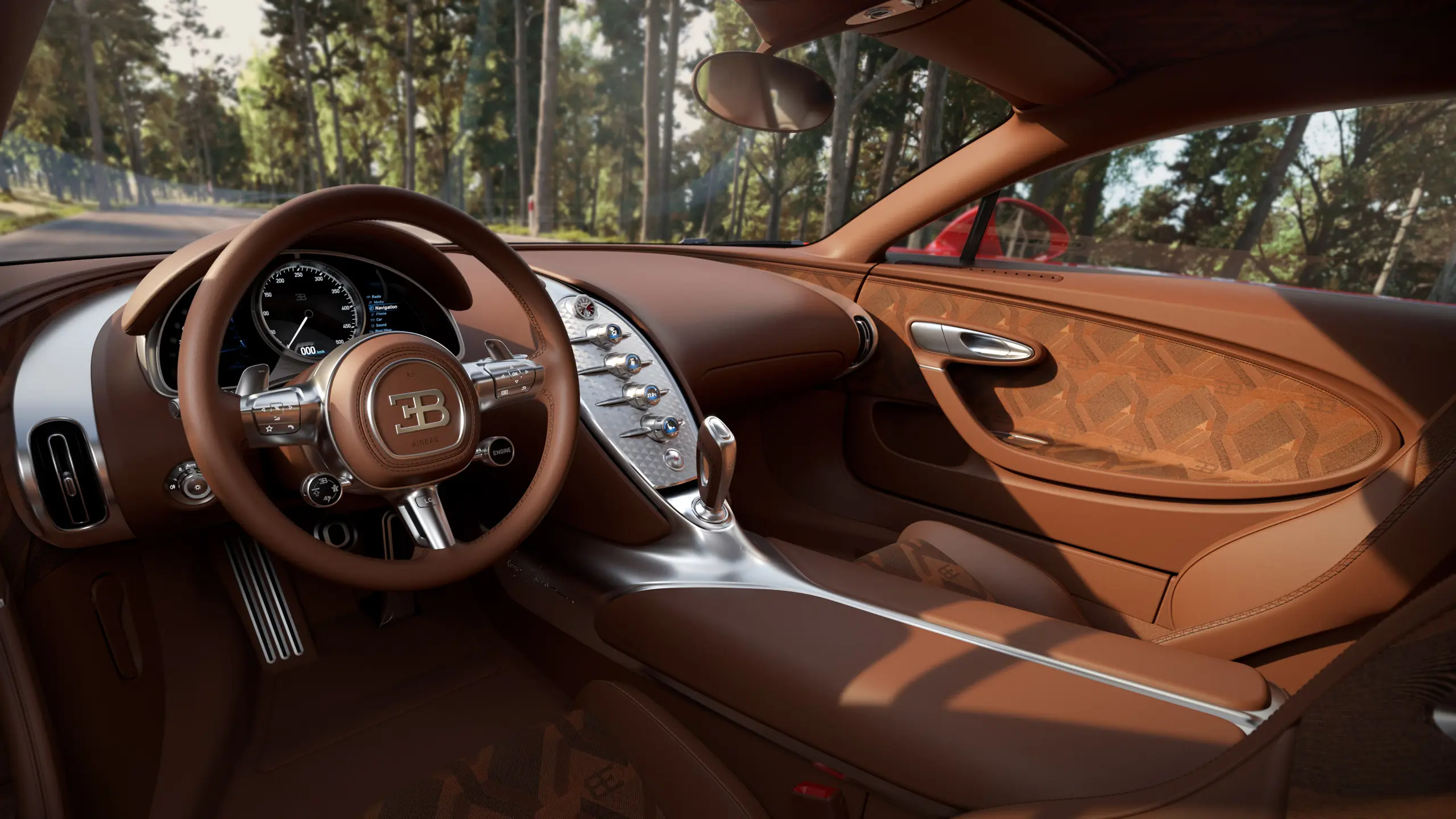
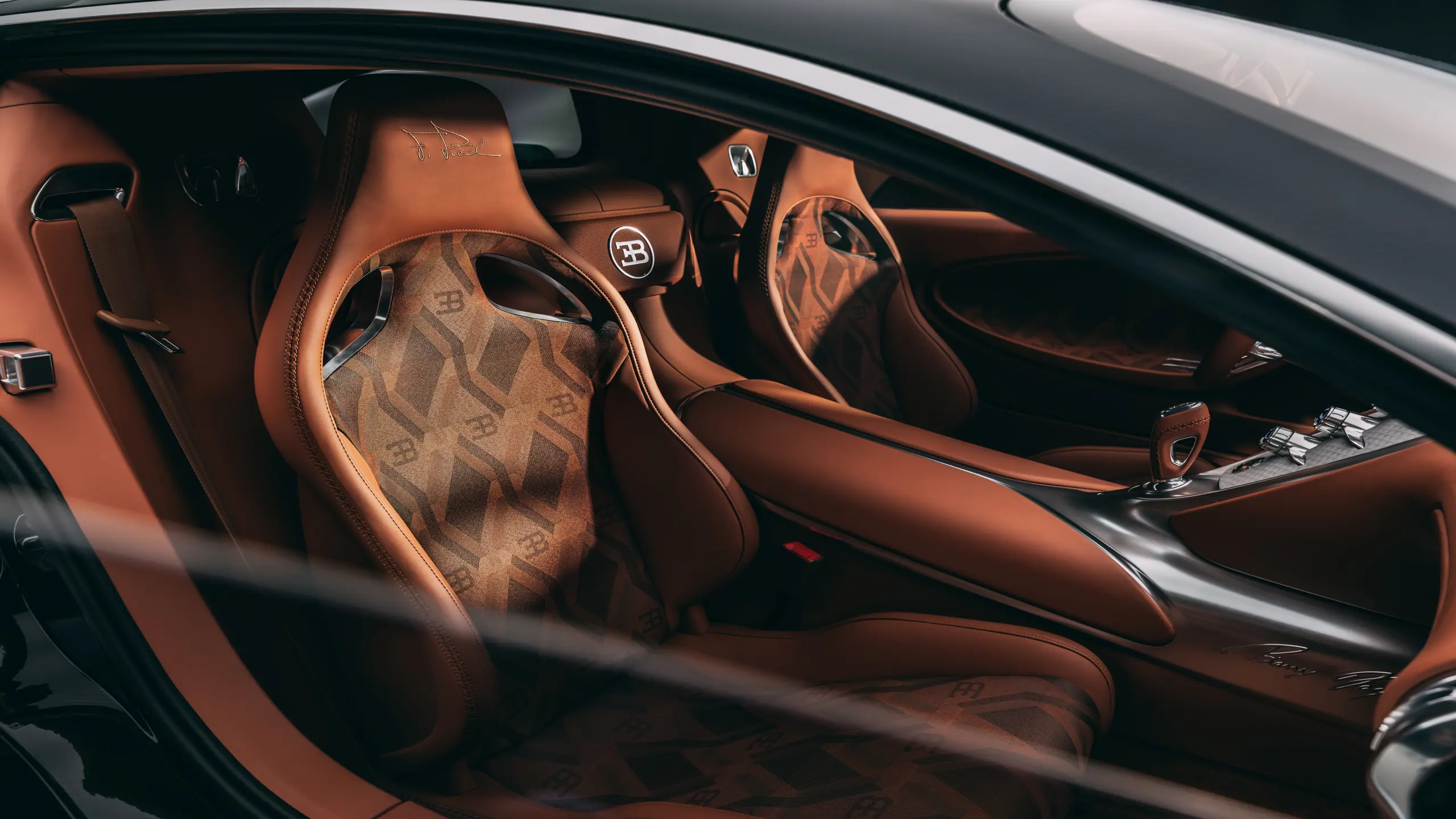
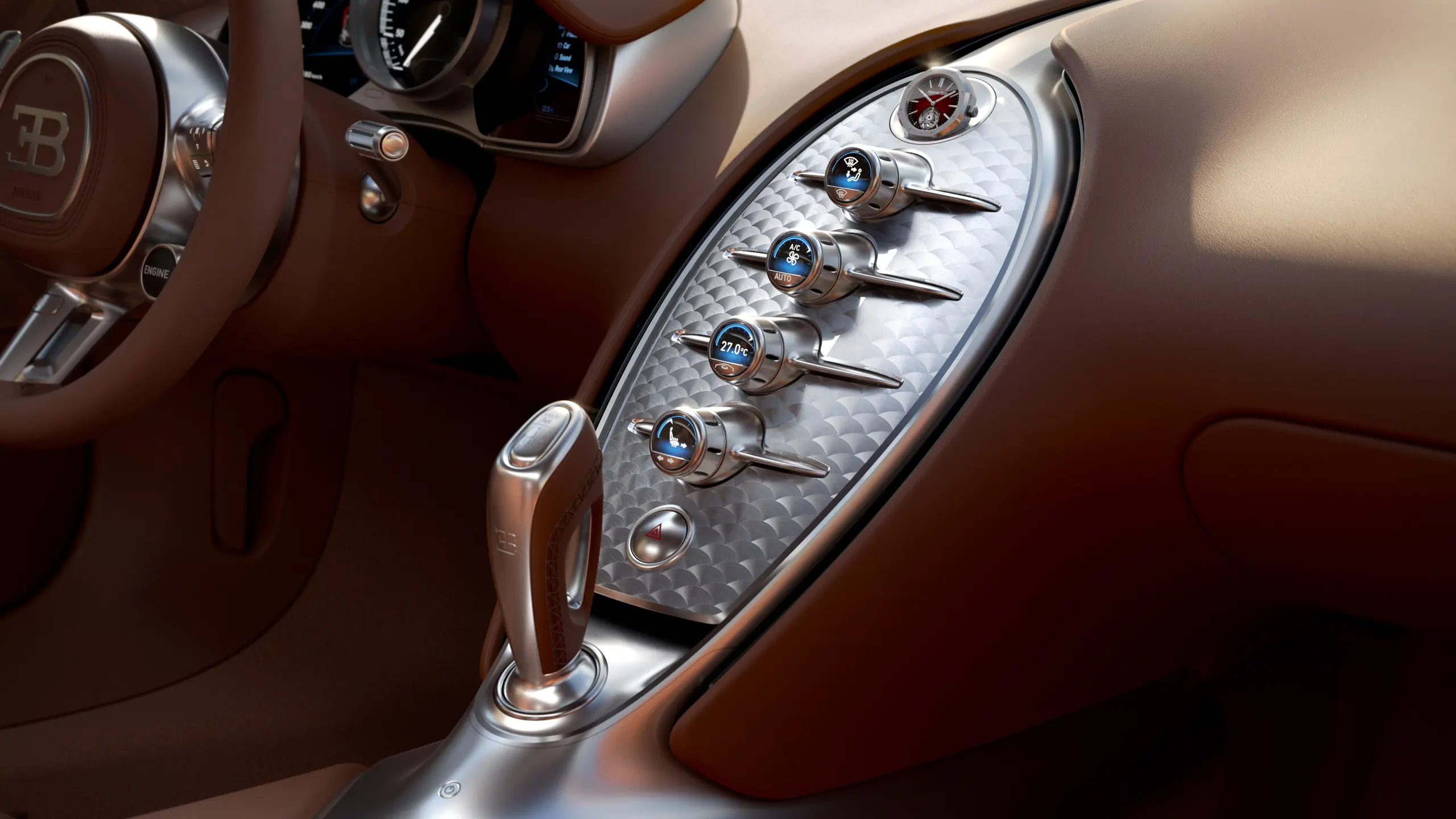
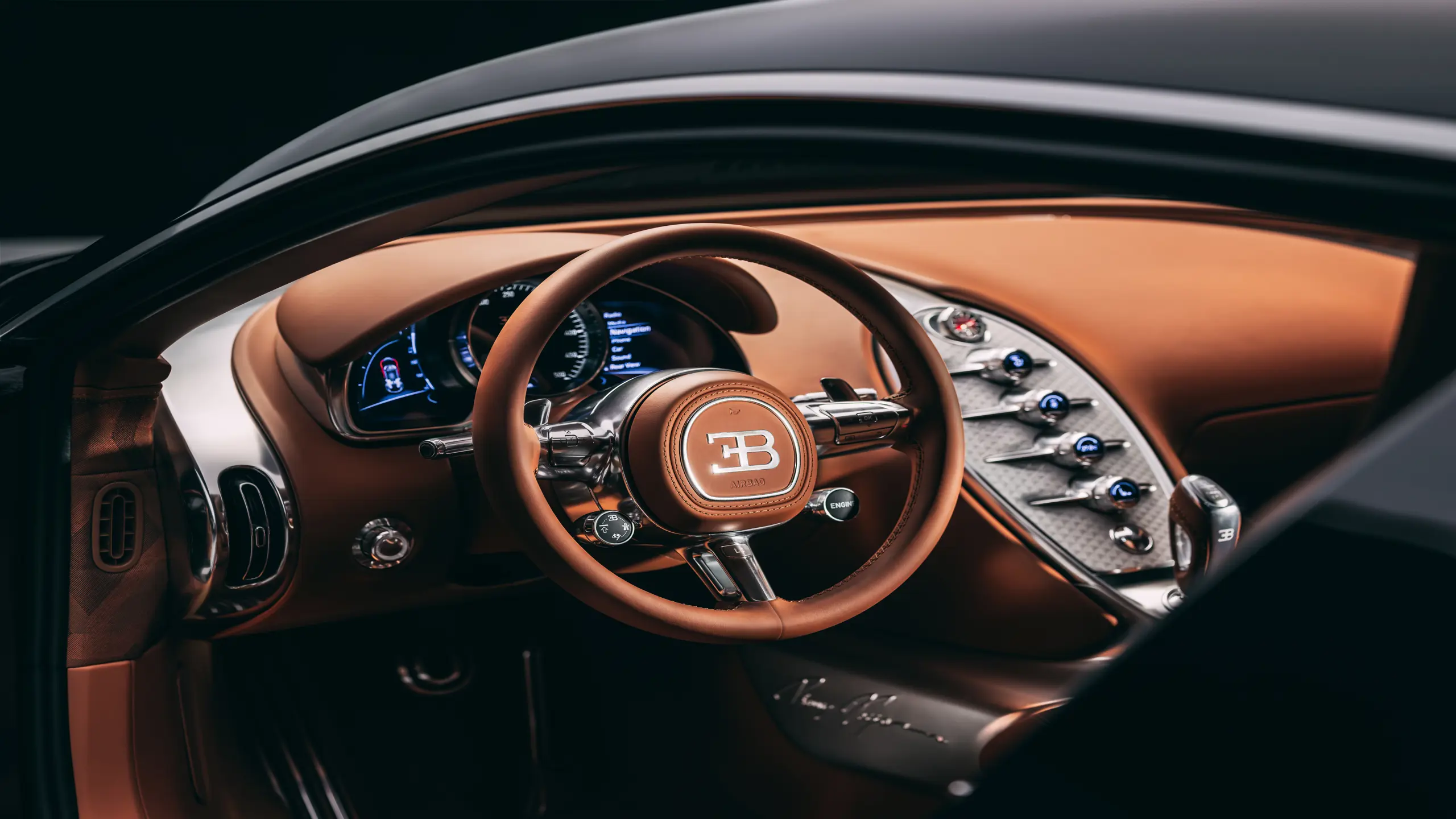
Inside, the F.K.P. Hommage represents a near-complete departure from previous W16 models. A new circular steering wheel, Bauhaus in character and reminiscent of the original Veyron, anchors a cabin defined by architectural purity. The center console and tunnel cover are machined from solid aluminum blocks, emphasizing mechanical honesty and craftsmanship. Bugatti also introduces bespoke Car Couture fabrics, woven exclusively in Paris, expanding interior personalization beyond traditional leather. The undisputed centerpiece, however, is an Audemars Piguet Royal Oak Tourbillon integrated directly into the dashboard. Set within an engine-turned aluminum “island,” the 41 mm timepiece features a self-winding mechanism powered by the car itself, without any electrical connection, a poetic fusion of horology and automotive engineering. As the second creation of Programme Solitaire, the F.K.P. Hommage fully reimagines bodywork, interior and mechanical specification to tell a deeply personal story. In doing so, it becomes more than a tribute. It is the Veyron distilled to its purest form, a timeless shape infused with the most advanced W16 ever created. A final, definitive statement honoring the man who believed that impossibility was simply the starting point.